
Sloping ground means retaining structures
Almost everything built here sits on terraces. Poorly drained retaining walls are the most common structural problem we find in the area.
In Santa Bárbara de Nexe the pools are on sloping ground, many in a raised position with a retaining wall below. When a pool like that leaks, the water does not stay with the pool: it ends up in the wall and the embankment, and the problem stops being one of finishes.
We get there in about 20 minutes · Free site visit and quote
Santa Bárbara de Nexe is villa country with a view — halfway up the slope between Faro and the barrocal, where a lot of people built the house they intend to stay in.
South-facing slopes looking out over the lagoon and the sea, large plots, and a mix of restored traditional houses and good-quality new build. Detached villas on generous plots, many with a pool and retaining walls because of the slope, and a good number with natural stone cladding on the façade.
In Santa Bárbara de Nexe we do a lot of outdoor work — stone, walls, pools and façade maintenance.
Almost everything built here sits on terraces. Poorly drained retaining walls are the most common structural problem we find in the area.
Schist and local stone develop efflorescence and green growth on the exposed face. Washing them with the wrong product discolours the stone irreversibly.
The view has a price: south-facing façades take sun all year round and lower-grade paints lose their colour in two summers.
With the pool empty you can see the real condition of the substrate and how far the loose areas extend.
Removal of anything not holding, correction of irregularities and waterproofing where needed.
Adhesive rated for permanent immersion, with alignment checked panel by panel.
Epoxy applied and cleaned within the product's open time, with the cure respected before filling.
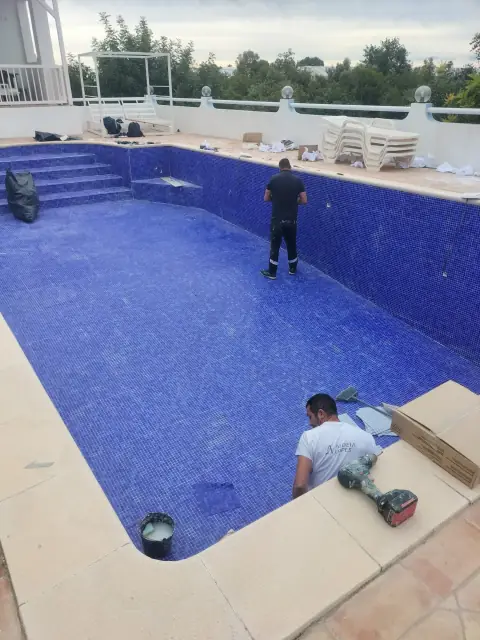
A complete blue mosaic finish and epoxy grouting, on a pool that was losing tiles.
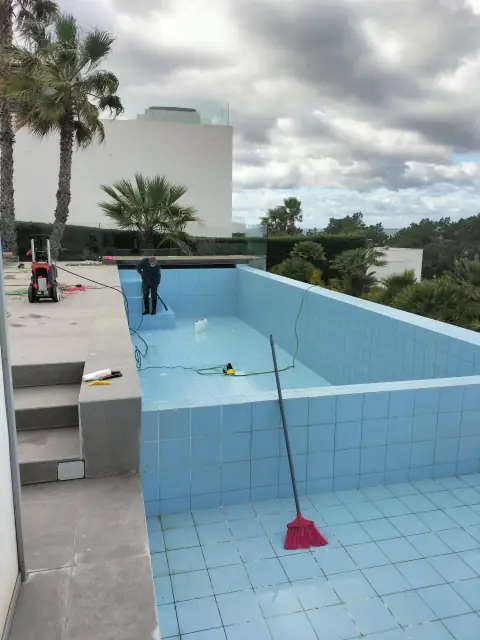
Complete replacement of the grout in a pale mosaic pool, with the old grout raked out and epoxy applied.
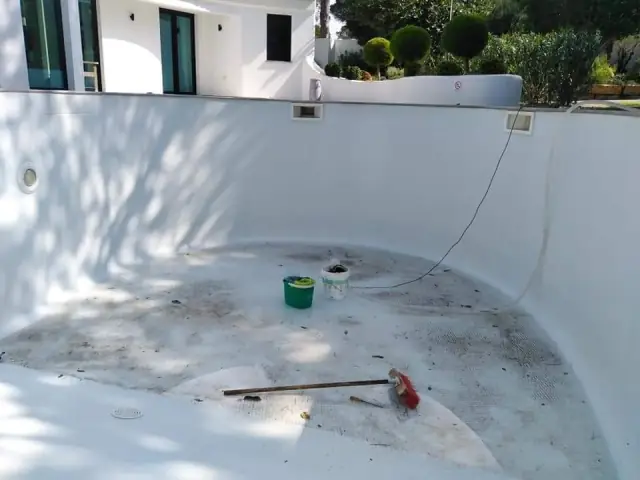
A localised repair to a pool joint, before the degradation forces a complete new finish.
We work in Santa Bárbara regularly. We set out from Loulé and get there in about 20 minutes, which means we can come and look at the job without charging for the trip.
Almost everything built here sits on terraces. Poorly drained retaining walls are the most common structural problem we find in the area. It is the situation we come across most often in Santa Bárbara, and it is why we look at the job before quoting.
In a pool, yes. Cement grout is porous: it absorbs treated water, darkens and degrades with chlorine and pH swings. Epoxy does not. It costs more and is more demanding to apply, but it lasts far longer.
A full regrout takes around one to two weeks, including the cure before filling. A new finish from scratch takes longer, three to four weeks depending on size.
Often yes, if it is a reference still in production. Where it is not, we propose close alternatives or a deliberate contrast — a different band at the waterline works better than a patch that shows.
Tell us what you need and we will come and look. We get there in about 20 minutes and the visit is free.