An old centre with rules of its own
Much of the centre falls within a heritage protection zone, which restricts façade colours, tile types and window frames. Working here means finding out what is and is not allowed before the first hammer blow.
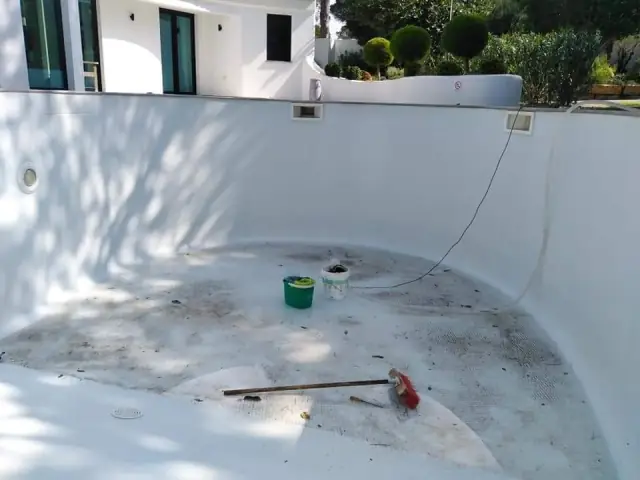
In Loulé the pools we restore are mostly at private villas built twenty or thirty years ago, where the original finish has reached the end of its life. It is the moment to decide between patching once more or redoing the finish and having it settled for many years.
We get there the same day · Free site visit and quote
Loulé is our base. It is the town where our office is, where the equipment is kept, and where we know the streets well enough to know where a scaffolding van can park without getting in anybody's way.
The town grows between the old quarter at its centre and the newer housing on the edges, with the barrocal — the limestone hill country — rising to the north and the plain dropping away towards the coast. Two worlds sit side by side here: flats and houses from the eighties and nineties in the newer parts, and old buildings with thick walls, barrel tiles and worked parapets in the historic centre.
In Loulé we get everything: from the landlord who needs a flat repainted between tenants to the full refurbishment of a family home in the centre.
Much of the centre falls within a heritage protection zone, which restricts façade colours, tile types and window frames. Working here means finding out what is and is not allowed before the first hammer blow.
No lorry fits down the streets of the centre and there is no room for a cherry picker. A lot of what we do there involves carrying material up by hand and putting up narrow façade scaffolding.
Stone masonry walls built without a damp-proof course draw moisture up from the ground. Painting over it without dealing with the source gives you blisters within months.
With the pool empty you can see the real condition of the substrate and how far the loose areas extend.
Removal of anything not holding, correction of irregularities and waterproofing where needed.
Adhesive rated for permanent immersion, with alignment checked panel by panel.
Epoxy applied and cleaned within the product's open time, with the cure respected before filling.
Loulé is our base — it is where our office and equipment are. We get there the same day and we know the town in detail.
Much of the centre falls within a heritage protection zone, which restricts façade colours, tile types and window frames. Working here means finding out what is and is not allowed before the first hammer blow. It is the situation we come across most often in Loulé, and it is why we look at the job before quoting.
Not always. It can be the grout, but it can also be pipework, the skimmer, an underwater light or the main drain itself. A simple level test tells you whether the loss is structural or in the circulation before anything is touched.
Outside the swimming season, between October and April. Besides not losing the use of it in summer, mild temperatures are better for curing the products than the August heat.
In most cases because the grout lost its seal and water got in behind. It also happens when the adhesive used was not rated for permanent immersion, or when the pool was left empty in the sun for a long time.
Tell us what you need and we will come and look. We get there the same day and the visit is free.