Serious winter rain
It rains a good deal more here than in Vilamoura or Faro. A roof that just about copes on the coast will leak in São Brás at the first storm. This is where we push hardest to get the roof done before October.
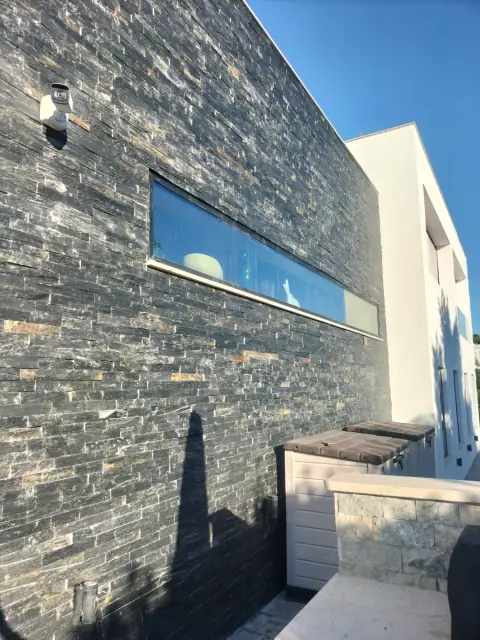
In São Brás local stone and lime are part of the building language of the traditional house. Restoring a wall or a stone surround here means following what exists — remaking what is there with the same kind of stone and the same joint, not replacing it with a catalogue piece that shows from a distance.
We get there in about 30 minutes · Free site visit and quote
São Brás is the gateway to the hills: higher, cooler and wetter than the coast — and it is that difference in climate that defines the kind of work we do there.
Ground rising towards the Serra do Caldeirão, with cork oaks, whitewashed houses from the cork-trade tradition, and a winter dampness far more pronounced than by the sea. Traditional Algarve houses with roof terraces and lacework chimneys, limewashed walls and barrel-tile roofs, many being slowly restored by people who moved in from elsewhere.
In São Brás the most common request is restoring a traditional house: roof, damp and exterior paintwork, almost always together.
It rains a good deal more here than in Vilamoura or Faro. A roof that just about copes on the coast will leak in São Brás at the first storm. This is where we push hardest to get the roof done before October.
The lacework chimneys and traditional parapets break easily and cannot be bought ready-made. Repairing them means recreating the existing pattern, not swapping in a catalogue part.
On traditional walls, sealing the surface with impermeable plastic paint traps the moisture inside and blows the render off. These houses need products that let the wall breathe.
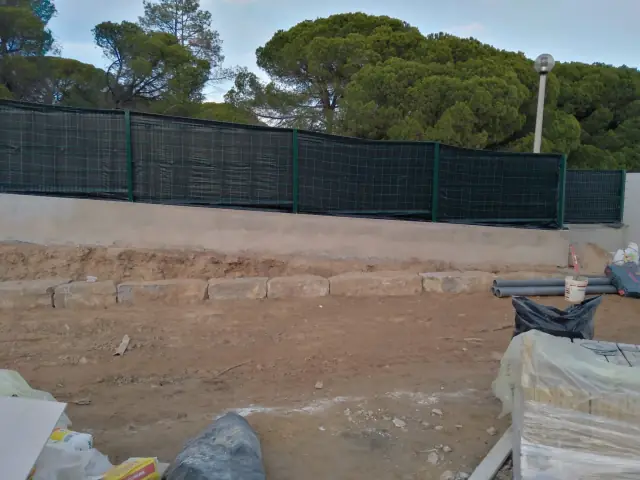
With walls, what decides everything is the slope, the soil type and where the water runs.
We show samples and, wherever possible, finished work — stone in a catalogue photograph is never stone on a wall.
The invisible stage, and the one that determines whether the wall lasts decades or years.
Laying with tones distributed, joints filled and the face cleaned down at the end.
We work in São Brás regularly. We set out from Loulé and get there in about 30 minutes, which means we can come and look at the job without charging for the trip.
It rains a good deal more here than in Vilamoura or Faro. A roof that just about copes on the coast will leak in São Brás at the first storm. This is where we push hardest to get the roof done before October. It is the situation we come across most often in São Brás, and it is why we look at the job before quoting.
It is priced by square metre of visible face, and what changes it most is the type of stone, the height of the wall and whether it is a retaining or a boundary wall. A retaining wall needs a foundation and drainage that a boundary wall does not.
Stonework is slow by nature, because every piece is laid by hand and chosen for its place. A boundary wall of a few metres takes days; a retaining wall of any height takes weeks, counting the foundation and the curing time.
We work with suppliers in the region. We show samples and, wherever possible, work already done — stone in a catalogue photograph is never stone on a wall at real scale and in real light.
Tell us what you need and we will come and look. We get there in about 30 minutes and the visit is free.