Working in an occupied block
There is no compound and nowhere to set material down. Everything comes in and goes out through the same lift the neighbours use, and dust from a refurbishment reaches three flats if it is not contained properly.
In Faro the roofing work is mostly on terraces and flat roofs of apartment blocks rather than on tiles. Waterproofing is done with the building occupied, and the details — drains, parapet junctions, pipe penetrations — are the source of the overwhelming majority of leaks.
We get there in about 25 minutes · Free site visit and quote
Faro is the district capital: more flats than houses, more landlords than resident owners, and jobs done with neighbours above, below and on both sides.
A compact city facing the Ria Formosa lagoon, with the walled historic quarter, dense residential neighbourhoods around it, and the university campus at Gambelas driving rental demand. Mostly three- to eight-storey residential blocks, many from the seventies and eighties, with enclosed balconies, original installations and compact floor areas. In the old quarter, older buildings refurbished for letting.
In Faro the bulk of the work is post-construction cleaning in refurbished flats and interior painting between tenants.
There is no compound and nowhere to set material down. Everything comes in and goes out through the same lift the neighbours use, and dust from a refurbishment reaches three flats if it is not contained properly.
With the university and the hospital driving demand, some flats change tenant every year. Each change calls for a deep clean and often a freshening coat of paint within a few days.
Unloading material in the old quarter means planning the hour. Turning up at nine in the morning in a street in Penha without having thought about it costs you half the morning.
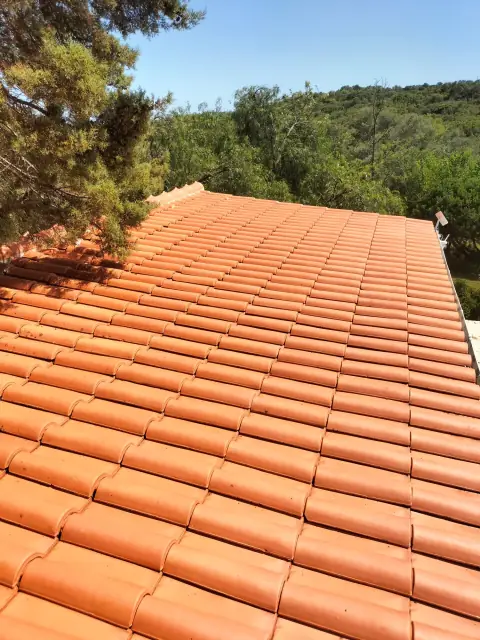
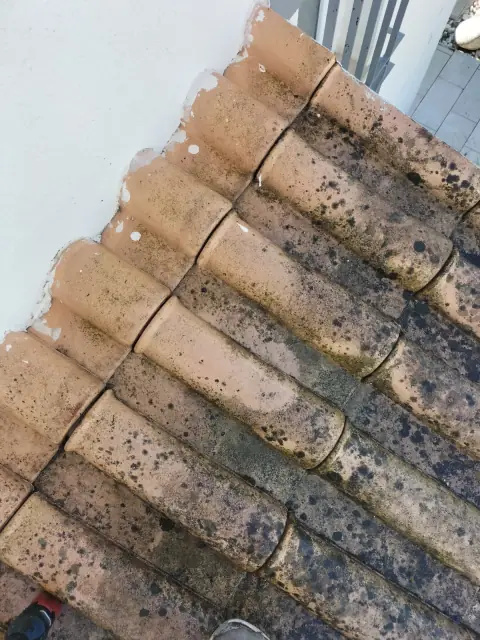
We go up and see the real condition: tiles, structure, junctions and gutters. We photograph everything to show you.
Water gets in at one point and appears at another. Finding the source is half the job.
We separate what is urgent from what can wait, so you can decide with the facts.
Scaffolding or a safety line as appropriate, and protection of what is below.
We work in Faro regularly. We set out from Loulé and get there in about 25 minutes, which means we can come and look at the job without charging for the trip.
There is no compound and nowhere to set material down. Everything comes in and goes out through the same lift the neighbours use, and dust from a refurbishment reaches three flats if it is not contained properly. It is the situation we come across most often in Faro, and it is why we look at the job before quoting.
We do, including replacing the structure where the timber has gone. In those cases we say clearly when patching has stopped being worthwhile — patching a roof at the end of its life costs more over time.
Yes, with a safety line and proper equipment, or scaffolding where the job requires it. We do not improvise work at height, whatever the hurry.
Several years, but it is not permanent and it depends a great deal on exposure. A roof in shade and surrounded by trees grows moss back considerably faster than one in full sun.
Tell us what you need and we will come and look. We get there in about 25 minutes and the visit is free.